
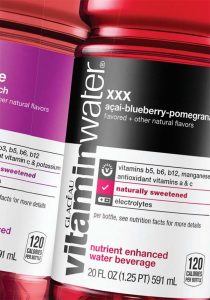
 Walking down the beverage aisle of a supermarket, one is dumbstruck by the sheer number of options available. A growing category, with dazzling colors that scream “buy me”, is vitamin waters.
Vitamin Water XXX is a classic example of unsubstantiated health marketing. Named for its “triple antioxidants” formula of acai, blueberry, and pomegranate flavors, the triple X logo has additional, naughty, connotations: the kind of xxx you can consume in front of your mother, according to the brand’s manufacturer.
With the help of this marketing drivel, the manufacturer, a Coca Cola subsidiary, is making billions of dollars a year. Unfortunately, the nutrition facts panel and the ingredient list is full of deceit.
This is what an honest ingredient list would read:
Here is the ingredient list on the package:
The ingredients listed are named to get you excited about how chic this product is.
For example, it’s not just any water being provided – you are getting reverse osmosis water, whatever that means. Probably better than regular water, right?
Next up – the sugar. Not just any sugar – it’s cane sugar. Sugar comes from beets or sugar cane. Someone must have decided that cane sugar sounds more sophisticated or healthy. Baloney.
A single serve bottle of this beverage has 8 teaspoons of needless, harmful sugar. Actually, the sugar actually does have a role to play in this beverage – to mask the very bitter taste of the vitamins added. However, 120 calories is a high price to pay when you can get non-bitter water out of the tap for zero calories and zero dollars.
Onwards, down the ingredient list, electrolyte sources also sounds cool. Admit it. However, did you know that a banana is also an electrolyte source?
The vitamins added will likely be mal-absorbed (read: you will urinate them). Their bio-availability is much lower than if consumed as part of whole foods.
Lastly, rest assured that a laboratory has perfected the right combination of natural chemicals to excite your olfactory and taste receptacles. It’s probably not the fruit and vegetable juice, which makes a guest appearance here, with less than 0.5% of the content.
